


Commercial Epoxy Flooring in Fremont, CA
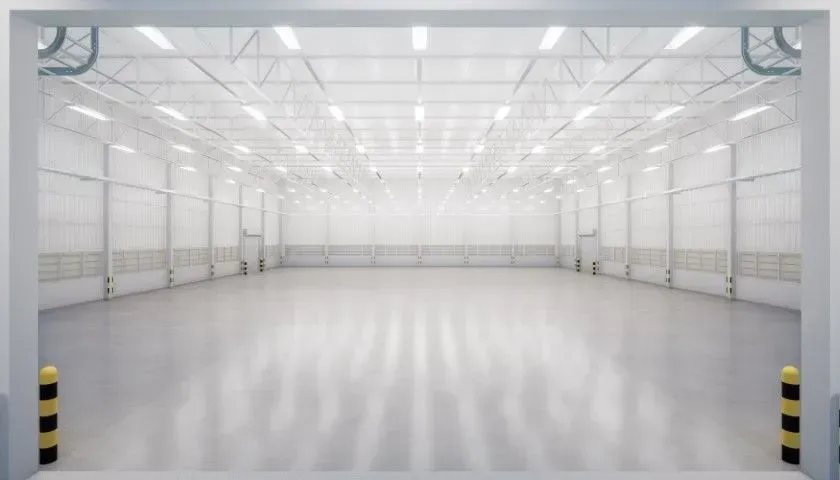

Precision Epoxy Flooring Fremont installs commercial epoxy flooring for warehouses, workshops, auto shops, commercial kitchens, retail floors and tech spaces in Fremont, Newark, Union City, Hayward, Milpitas and north San Jose. We visit the site and moisture-test the slab ahead of any quote, we talk through the traffic and spills the floor has to handle, and the work area is cleaned up when we finish. We're licensed and insured.
- Warehouse and industrial: floors for carts, pallet jacks and forklift aisles, with the system chosen at the site visit.
- Kitchens and food prep: we check the planned finish against the county's food-facility list with you.
- Retail and showrooms: solid color or metallic finishes for floors customers see.
- Free site visit: we look at the slab, test it for moisture and give you a quote.
Warehouse and Industrial Floors
Industry is a big part of the local economy. The city counts more than 900 advanced manufacturing companies, providing about one job in every four, and the Bayside Industrial area alone holds over two-thirds of the city's industrial floor space, which totals some 50 million square feet. The General Plan dates much of Bayside's development to the 1970s and early 1980s. Its buildings typically run to one or two storeys and hold a mix of uses, auto repair and manufacturing among them, alongside warehouses and distribution centers. Further south, Tesla's 5.3 million square foot factory sits within the city's 850-acre Innovation District in Warm Springs, and Ardenwood Technology Park adds about 3 million square feet of research and development space in North Fremont.
Floors in these buildings deal with rolling loads, dropped parts, oil and cleaning chemicals. Thin film coatings are made for lighter traffic; heavy loads and impact call for a thicker system, generally with aggregate built into it. Broadcast systems also need a rougher bond surface: industry guidance puts them at a concrete surface profile (CSP) of 3 or more on the ICRI scale, reached by shot blasting or diamond grinding, while thin film coatings can go down on a smoother CSP 1 to 3.
Commercial Kitchen and Food-Prep Floors
Under the California Retail Food Code, floors in food preparation, storage, dishwashing, refuse, janitorial and restroom areas have to be smooth, durable, nonabsorbent and easy to clean. The same section asks for floors to be coved where they meet the wall, with a radius of at least 3/8 inch and the cove running at least 4 inches up the wall, with limited exceptions such as rooms that only hold food in unopened shipping containers.
Locally, Alameda County's Department of Environmental Health publishes its own list of floor finishes for retail food facilities, and that county list covers Fremont, Newark, Union City and Hayward. A kitchen floor in any of those cities is planned from that list.
Alameda County food facilities: the county's finish list rates a two-part epoxy resin pour at least 1/4 inch thick as generally acceptable and puts epoxy paint, on any surface, under unacceptable finishes. Plain concrete also sits under unacceptable, with approval depending on the equipment and how the space is used. The county asks operators to check with their District Inspector before buying or installing a finish, and a remodel needs plan approval first, with the floor and cove base finishes listed for each room.
Retail, Showroom and Tech Space Floors
Where customers walk the floor, appearance matters as much as wear. A solid color epoxy gives an even, easy-to-clean surface for stockrooms, shops and tech spaces. For a lobby or showroom where the floor is meant to be noticed, a metallic epoxy floor is poured with metallic pigments that are worked while wet, so the swirled pattern comes out differently on every floor. A flake system, the same one many garages get, adds texture underfoot in back-of-house areas.
Moisture Testing Before Any Commercial Coating
Moisture moving up out of a slab is a known cause of blistering and delamination in new coatings, and on a large floor that is a costly problem to put right. That is why we test commercial slabs for moisture before quoting, so any reading above the coating maker's limit is known before work is scheduled and not after the floor is in use.
The usual tests are ASTM F1869, which measures vapor coming off the surface using calcium chloride under a sealed dome, and ASTM F2170, which reads relative humidity with probes set into holes drilled in the slab. Coating makers each publish their own limits. A common pair is 3 pounds of vapor per 1,000 square feet over a day on the dome test and 75% relative humidity on the probe test; above them, the data sheet calls for a moisture-mitigating primer or barrier first.
Slip Resistance and Wet Areas
Commercial floors get washed down, tracked with rainwater and splashed with whatever the business handles. Local rainfall is concentrated between November and March, with the summer months close to dry, so entrances and loading areas see most of their rain-tracked wet traffic in winter.
Wet floors: a smooth, glossy coating can be slippery when it's wet. Texture is added by broadcasting flake or aggregate into the system, or by putting an anti-slip grit such as aluminum oxide or polypropylene into the topcoat. Tell us where the wet zones are (dish areas, wash bays, entrances) at the site visit so the texture goes where it's needed.
Scheduling, Cure Times and Air Rules
How long a space stays closed depends on the product and the temperature. Typical epoxy data sheets put light foot traffic at roughly a day after the last coat and wheeled or vehicle traffic at two to three days, with full cure at about seven days, all quoted at about 70 to 80°F. Colder slabs take longer: at the Newark weather station (1971-2000 normals), December and January lows average about 42°F. Bring your opening hours and any deadlines to the site visit so we can agree dates that work for you.
Coatings used in the region also have to meet the Bay Area Air Quality Management District's architectural coatings rule (Regulation 8, Rule 3). The rule's 2009 amendments set a cap of 100 grams of VOC per liter on floor coatings from 2011, and 250 on industrial maintenance coatings, a category the rule defines to include floors exposed to extreme conditions.
Typical Commercial Epoxy Prices
Published cost guides in 2026 put standard commercial epoxy at about $3 to $12 per square foot installed, while heavier industrial and food-plant systems can cost more. These are typical prices around the Bay Area, not ours; the free site visit gives the real figure for your floor.
- Standard commercial epoxy, per square foot: about $3 to $12.
- Heavier industrial or food-plant builds: can sit above that range.
- Diamond grinding or shot blasting: roughly $1 to $4 a square foot, plus any crack and spall repairs.
Beyond the system, the price depends on the slab: an old coating to remove or damaged concrete adds prep time, and a high moisture reading can mean a moisture-mitigating primer is needed first. The site visit tells you which of these apply.
Commercial Floors Across the Southern East Bay
We work in Fremont's industrial and business areas, from Bayside Industrial and the Pacific Commons Shopping Center to Warm Springs and Ardenwood, and in Newark, Union City and Hayward, where the city counts about 37 million square feet of industrial space. South of the county line we cover Milpitas, which has 6.7 million square feet of distribution and warehouse space, and north San Jose. Homeowners can find our garage and interior work on the main epoxy flooring page.
Commercial Epoxy Flooring FAQs
Short answers on cost, downtime, kitchen rules, grip and lifespan for commercial floors.
What does commercial epoxy flooring cost per square foot?
Cost guides for 2026 show standard commercial floors at roughly $3 to $12 a square foot, and more for heavier industrial and food-plant systems. Your actual price comes from the free site visit.
How long will our space be out of use?
On many epoxy products, staff can walk on the new surface the next day, carts and vehicles follow two or three days later, and the coating is fully cured after roughly a week in mild (70 to 80°F) conditions. Cold weather stretches those times, so we'll plan the dates with you before work starts.
Can epoxy go down in a restaurant kitchen?
Alameda County lists a two-part epoxy resin pour at least 1/4 inch thick as generally acceptable for retail food facilities, while epoxy paint is not. Check the finish with your District Inspector before work begins, and get plan approval for a remodel.
Can you coat a floor that already has an old coating on it?
It depends on its condition. A sound, well-bonded coating can sometimes be ground down and recoated, while one that's peeling or failing comes off to bare concrete. Either way, that prep is included in your quote.
How do you keep a coated floor from being slippery?
Flake or aggregate can be broadcast into the system, or an aluminum oxide or polypropylene grit can be mixed into the final coat. We'll mark the wet and greasy areas with you at the site visit.
How long does a commercial epoxy floor last?
A professionally installed epoxy floor will often give 10 to 20 years when the slab was well prepared and the floor is looked after, though heavy traffic and thinner coatings may shorten that span considerably.
Are you licensed and insured?
Yes, and any California contractor's license can be confirmed on the Contractors State License Board's site, cslb.ca.gov.